
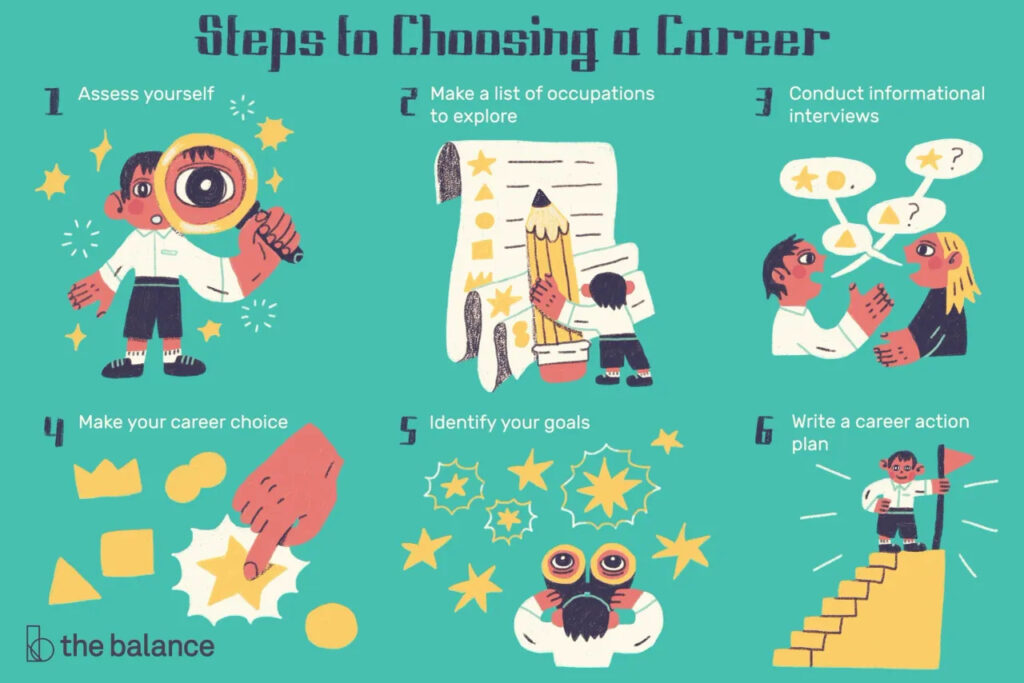
When we ask people about the most meaningful parts of their lives, family, health and work often rank as the top three. Selecting a career path can take weeks, months or even years as you learning is a continuous process. Choosing the type of work you’ll do, therefore, is arguably one of the most important decisions you can make.
Lets list down a few major points to be kept in mind while selecting a suitable path with a careful analysis of the pros and cons.
1. Through reading about every possible career path.
Many people try this method of choosing the best suitable career option. They find many exciting things about various career paths as well.
Classification, Reading through and understanding various career clusters and paths gives more clarity with reference to the skills, abilities, profiles and above all challenges needed to follow a certain path.
https://mindtrailz.edumilestones.com/career-library/all/
2. Through Mentor Guidance:
Listening to experts in various sectors and engage with a mentor on the selected field may help certain people. However, it is limited to mentor availability and accessibility across the sectors.
3. Through understanding oneself and connecting it with a suitable career path.
Understanding yourself first. Understanding your personality, Understanding your career interest, Understanding your Aptitude and connecting these traits with the most suitable career paths for you
4. Through experiencing various career paths and selecting one.
Last but not the least, people venture into experiencing various career options before finalising one. You can definitely figure out which work exciting you the most.
But, how many you can try? 10? 30? 50?
Not practical to try most. And finally, end up with the best among the options tried.
Here are a few questions to get you started. Try not to dwell on the questions for too long. Instead, write down the first thoughts that come to mind. If you’re not sure of some answers, trusted friends or family members may be able to guide you.
Self-assessment questions to consider:
- What are your key values?
Example answers: Financial stability, helping others, independence - What soft skills do you possess?
Example answers: Time management, communication, confidence, problem-solving - What technical skills do you possess?
Example answers: Data analytics, planning, research, multilingual, photography - What natural aptitudes do you have?
Example answers: Writing, leadership, selling, project management, communicating, planning, technical problem-solving - What’s your personality like?
Example answers: Myers-Briggs (MBTI) personality type, quiet, outgoing, confident, aggressive, loyal - What are you interested in?
Example answers: Technology, writing, medicine, design
Now, you are left with the one which really kindled your passion, you also have complete understanding and having an immense future scope.
Career planning is the process of eliminating the options which never fulfil your career objectives and finding the best suitable option for you to set your future course.